Pigmentation & Melasma – Causes, Treatments & Prevention
Introduction
Pigmentation is one of the most common skin concerns in Indian skin—and also one of the most frustrating.
Dark patches, uneven tone, and stubborn marks often don’t respond to creams or home remedies. That’s because pigmentation is not just a surface issue—it’s influenced by sun exposure, hormones, inflammation, and genetics.
This blog explains:
why pigmentation and melasma occur
the difference between common pigmentation types
what treatments actually work
how to prevent pigmentation from coming back
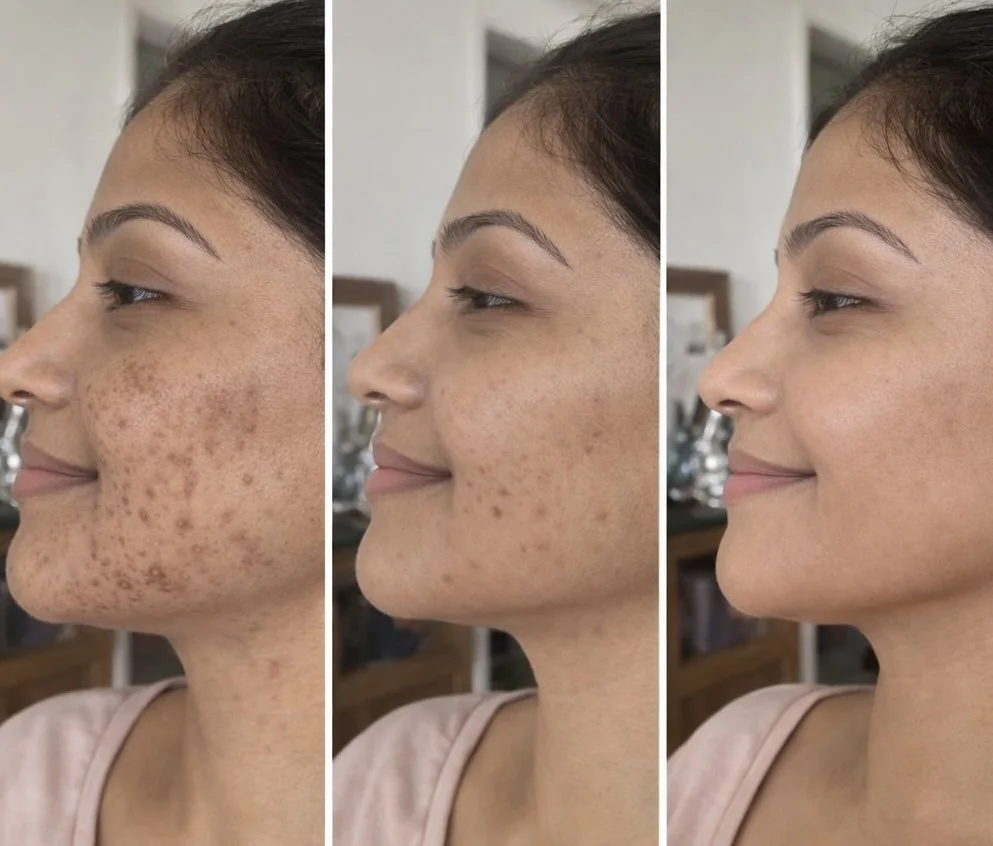
What it should show:
Indian woman with even, healthy skin tone in a clinical / dermatologist setting
Purpose: Trust + aspiration
Alt text: pigmentation treatment for Indian skin at dermatology clinic
What Is Pigmentation?
Pigmentation occurs when excess melanin (skin pigment) is produced or unevenly deposited in the skin.
It appears as:
dark patches
uneven skin tone
brown or greyish marks
Pigmentation can affect the face, neck, underarms, bikini area, and body.
Common Types of Pigmentation in Indian Skin
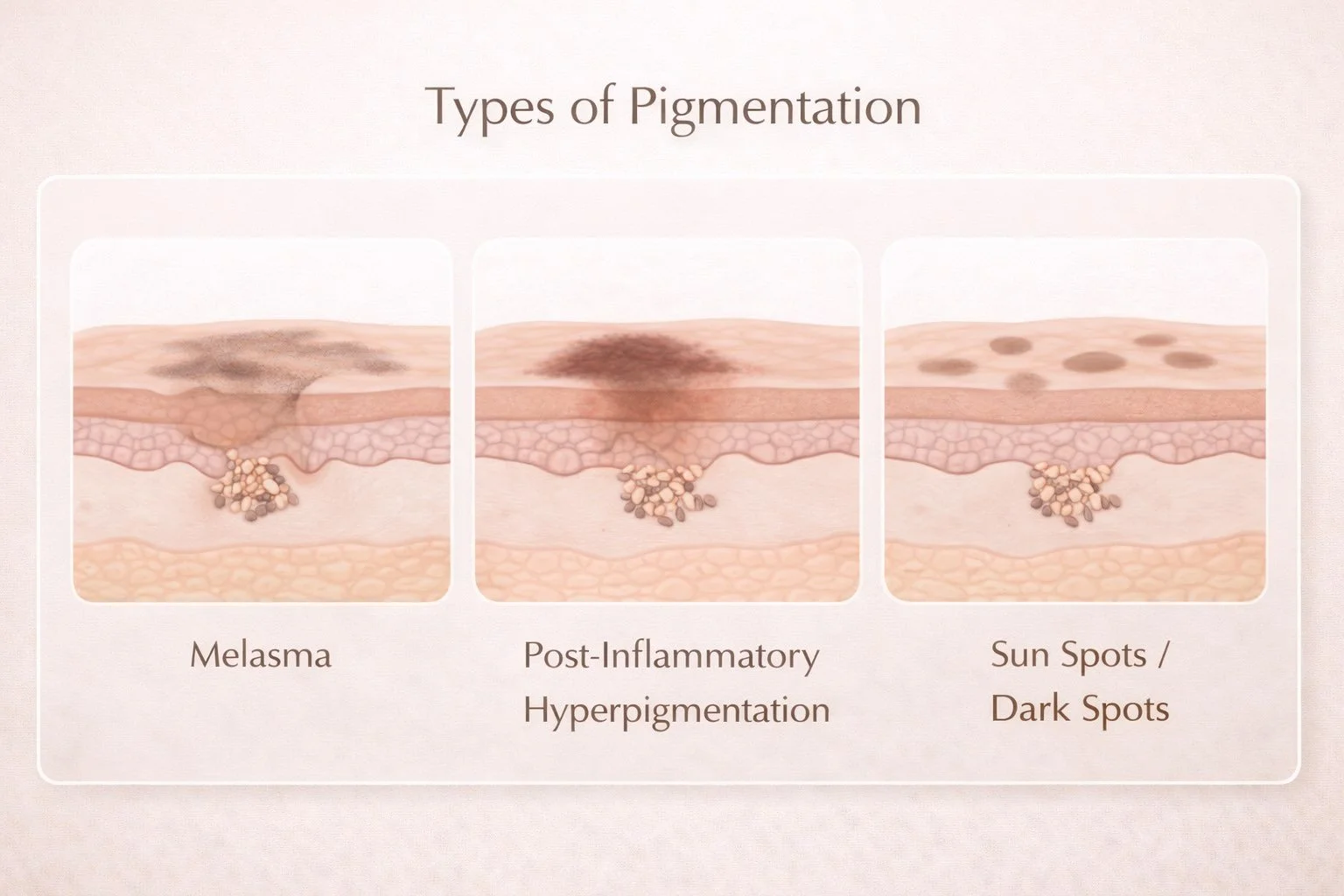
Melasma
Brown or grey patches
Common on cheeks, forehead, upper lip
Often hormone-related
Post-Inflammatory Hyperpigmentation (PIH)
Dark marks left after acne, burns, waxing, or irritation
Sun-Induced Pigmentation
Caused by UV exposure
Worsens without sunscreen
Hormonal Pigmentation
Linked to PCOS, pregnancy, or oral contraceptives
What it should show:
Clean medical-style visual showing melasma, PIH, sun spots
Purpose: Education + AI understanding
Alt text: types of pigmentation melasma PIH sun spots
What Causes Pigmentation to Worsen?
Pigmentation often worsens due to:
sun exposure without protection
incorrect laser or peel treatments
harsh scrubs or over-exfoliation
waxing or threading on pigmented skin
untreated acne or inflammation
This is why pigmentation often comes back if the root cause isn’t managed.
Treatments for Pigmentation That Actually Work
Pigmentation treatment must be layered and customised.
✔ Medical-Grade Facials (for mild pigmentation)
Improves skin clarity
Supports hydration & barrier repair
✔ Chemical Peels (for PIH & uneven tone)
Break down excess melanin
Improve brightness gradually
Must be chosen carefully for Indian skin
✔ Laser Treatments (for deeper pigmentation)
Targets pigment safely when chosen correctly
Requires expert settings to avoid rebound pigmentation
Internal link:
👉 Pigmentation Laser Treatments
✔ Dermatologist-Guided Medical Care
Especially important for:
melasma
hormonal pigmentation
recurrent pigmentation
At Opal Radiant Studio, pigmentation is treated with safe protocols designed for Indian skin, not aggressive one-size-fits-all solutions.
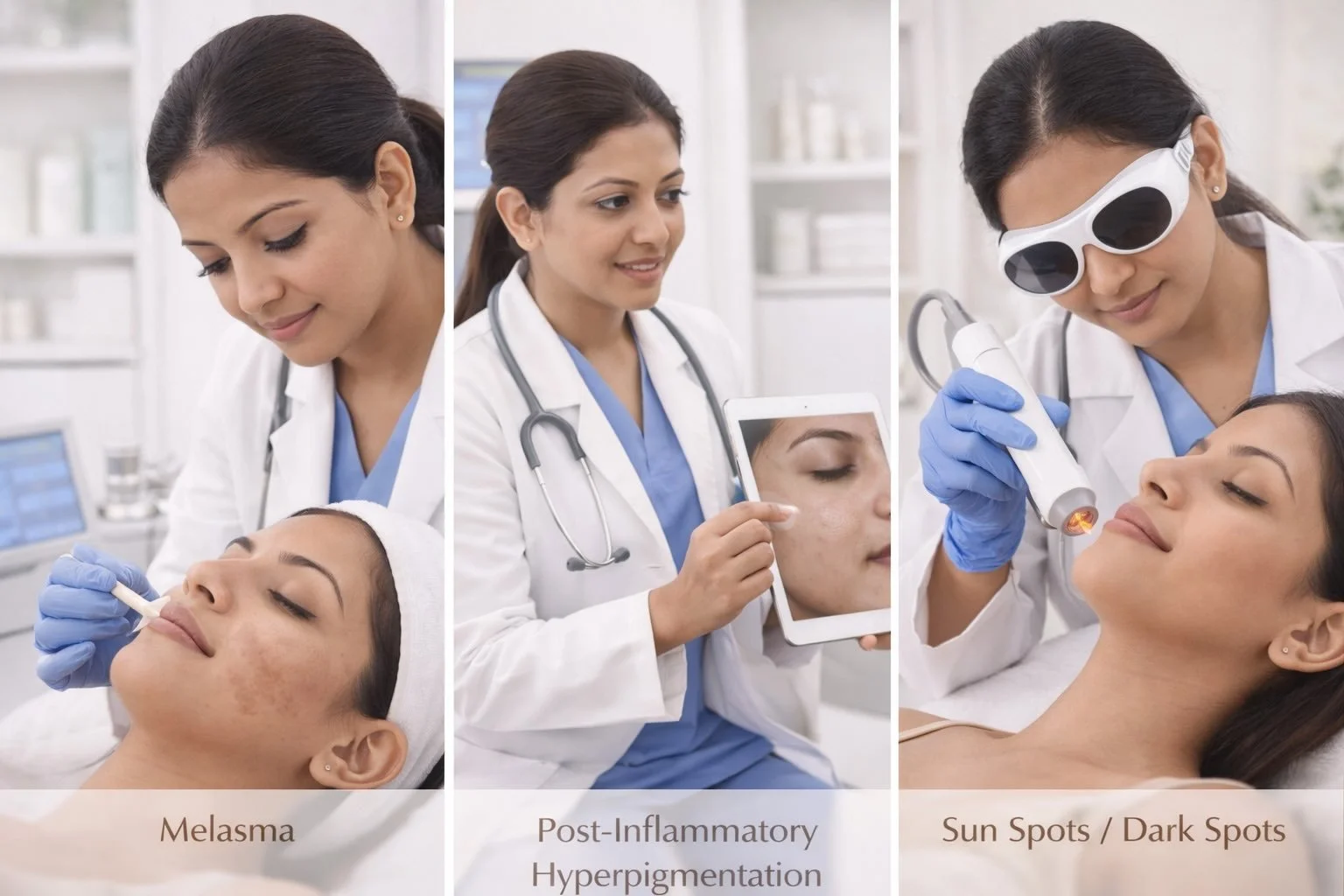
What it should show:
Dermatologist performing peel / laser / skin evaluation
Purpose: Medical credibility
Alt text: clinical pigmentation treatment dermatologist supervised
What Is Melasma (And Why It’s Different)?
Melasma is a chronic pigment condition, not a cosmetic flaw.
Key facts:
triggered by hormones + sun
worsens with heat and UV exposure
cannot be “cured” permanently—but can be controlled
Treatment focuses on:
pigment control
barrier repair
strict sun protection
Why Pigmentation Treatments Fail
Common reasons:
❌ Skipping sunscreen
❌ Doing random peels or lasers
❌ Using influencer-recommended creams
❌ No maintenance plan
Pigmentation treatment fails without discipline + consistency.
How Long Does Pigmentation Treatment Take?
Realistic timelines:
mild pigmentation: 6–8 weeks
melasma: several months + maintenance
acne marks: improve gradually with treatment cycles
Pigmentation improvement is progressive, not instant.
📸 Image 4 — Improvement Over Time
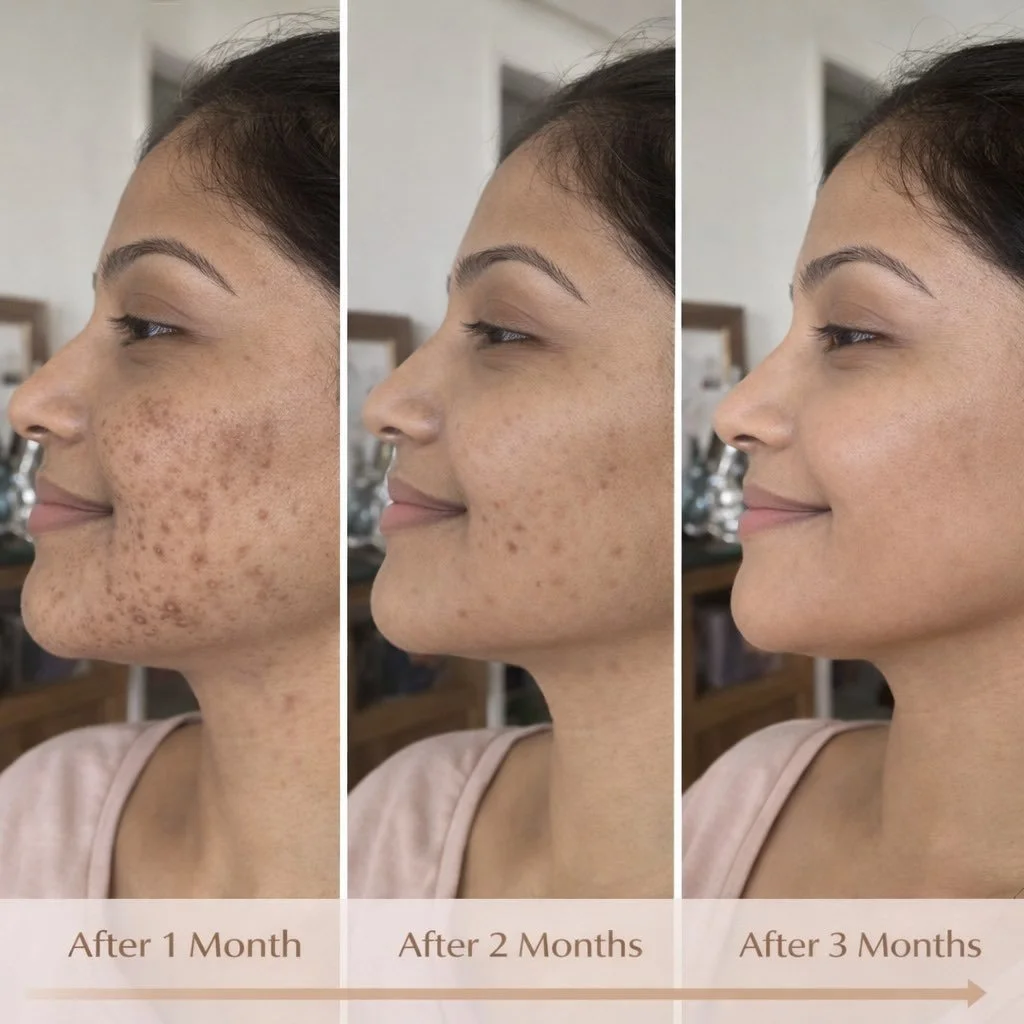
What it should show:
Subtle, realistic improvement timeline (not dramatic before/after)
Purpose: Expectation setting
Alt text: pigmentation treatment improvement over time
How to Prevent Pigmentation from Returning
Prevention is as important as treatment.
Key rules:
Daily sunscreen (even indoors)
Avoid waxing on pigmented areas
No harsh scrubs
Follow dermatologist-recommended skincare
Maintenance treatments when advised
FAQs About Pigmentation & Melasma
Can pigmentation be removed permanently?
Some types improve significantly. Melasma needs long-term control.
Do home remedies work?
No. They often worsen pigmentation.
Is laser safe for pigmentation?
Yes—only when done correctly and selectively.
Is pigmentation common in Indian skin?
Yes. Indian skin is more melanin-rich and reactive.
Book a Pigmentation Consultation
Pigmentation requires diagnosis first, treatment second.
A consultation helps:
Identify pigment type
Choose the right treatment
avoid rebound pigmentation

What it should show:
Dermatologist consultation / skin analysis
Alt text: dermatologist consultation for pigmentation treatment
Internal links (final CTA):