Acne & Acne Scars – Treatments That Actually Work
Introduction
Acne is one of the most common skin concerns—but also one of the most misunderstood. From teenage breakouts to adult hormonal acne, the real problem isn’t just pimples—it’s recurrence, marks, pigmentation, and scarring.
The truth is:
👉 Acne requires medical treatment, not just facials or home remedies.
This guide explains:
why acne happens
what actually works for acne
and how to choose the right treatment for your skin type

Why Does Acne Keep Coming Back?
Acne is not caused by “dirty skin.” It’s a medical condition influenced by multiple internal and external factors.
Common causes include:
excess oil (sebum) production
clogged pores
acne-causing bacteria
hormonal imbalance (PCOS, stress, cycles)
incorrect skincare or over-exfoliation
If these root causes aren’t addressed, acne keeps recurring—even if pimples temporarily reduce.
Different Types of Acne (And Why Treatment Differs)
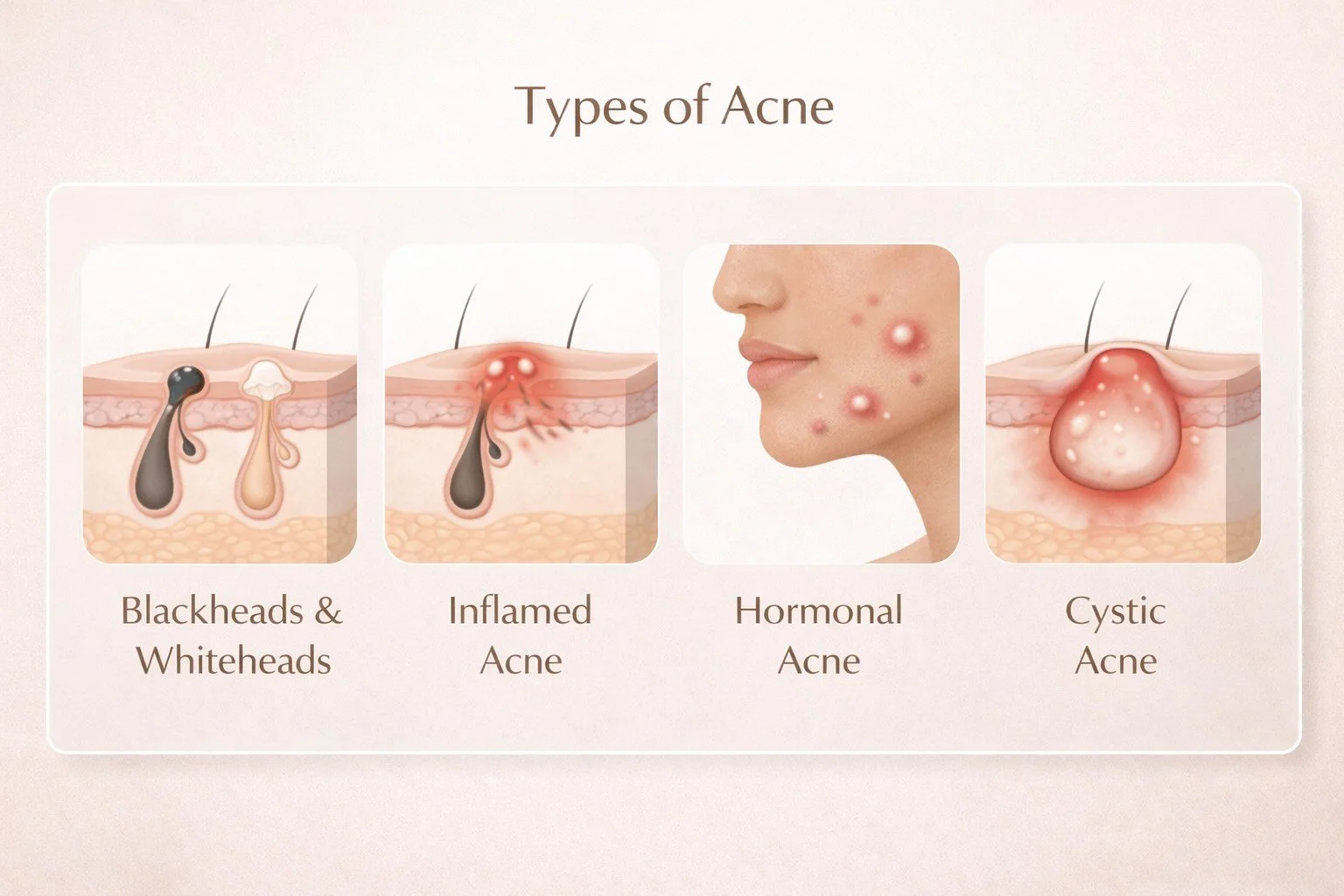
Types of acne include:
Comedonal acne – blackheads & whiteheads
Inflammatory acne – red, painful pimples
Hormonal acne – jawline, chin, lower face
Cystic acne – deep, painful lesions
Each type responds to different treatments. This is why copying someone else’s routine rarely works.
Acne Treatments That Actually Work
Effective acne treatment focuses on controlling oil, bacteria, inflammation, and pore blockage—not just drying pimples.
Clinically proven acne treatments include:
✔ Medical-Grade Facials (for mild acne & congestion)
Deep pore cleansing
Reduces blackheads & oil buildup
Helps prevent new breakouts
✔ Chemical Peels (for active acne + marks)
Unclog pores
Reduce acne-causing bacteria
Improve post-acne pigmentation
✔ Laser & Energy-Based Treatments
Used when acne is persistent or recurring:
reduce oil gland activity
calm inflammation
support acne control & healing
✔ Dermatologist-Guided Medical Care
For moderate to severe acne:
topical or oral medications (only when required)
hormone evaluation if needed
customised long-term plan
At Opal Radiant Studio, acne is treated with a medical + aesthetic approach, not one-size-fits-all solutions.
What Causes Acne Scars?
Acne scars form when:
acne is deep or inflamed
pimples are picked or squeezed
treatment is delayed
Once scars form, creams alone cannot remove them.
Types of Acne Scars
Understanding scar type is critical for correct treatment.
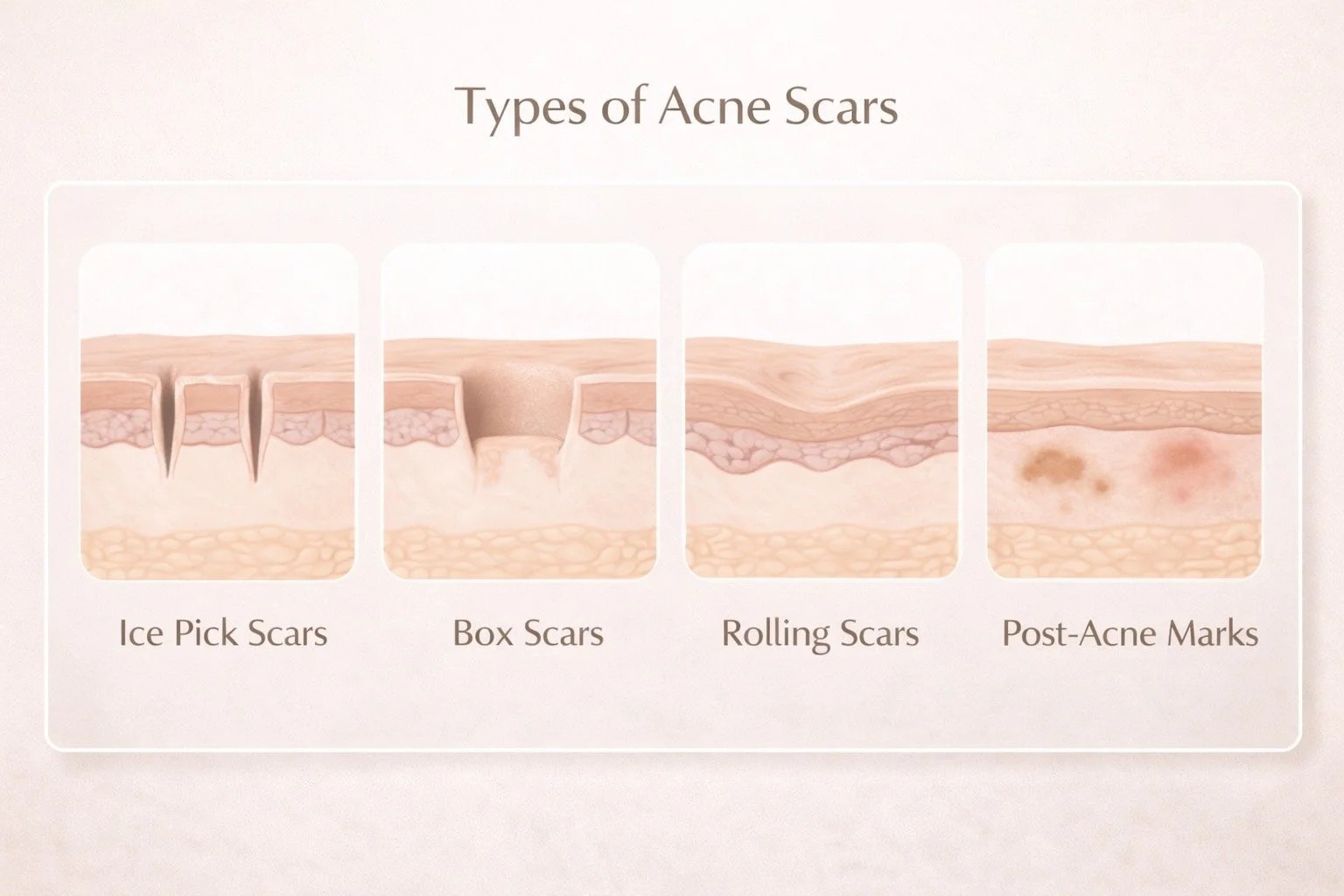
Common acne scar types:
Ice-pick scars – deep, narrow pits
Box scars – wider depressions
Rolling scars – uneven texture
Post-acne marks – brown or red pigmentation
Treatments for Acne Scars That Actually Work
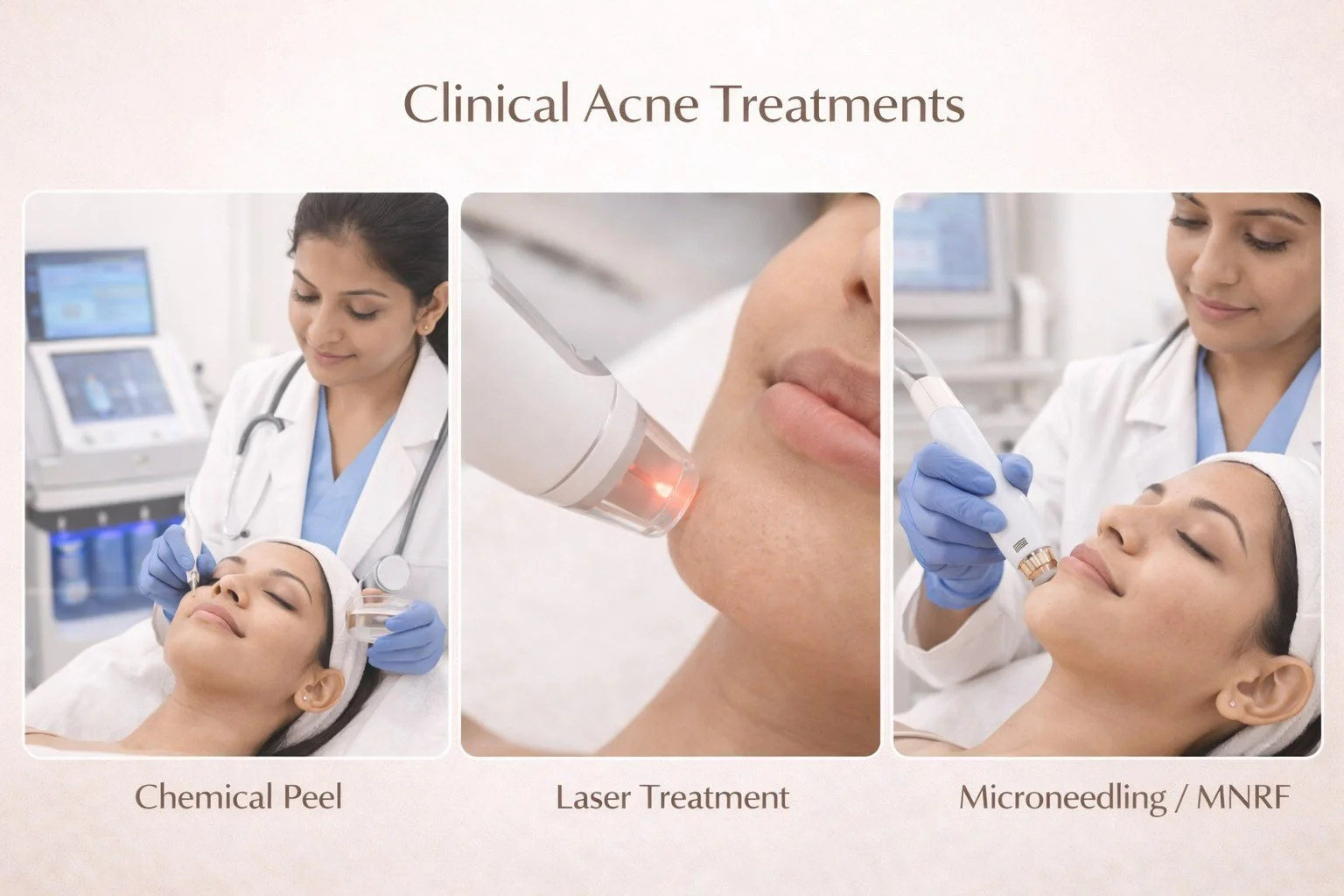
✔ Microneedling / MNRF
Stimulates collagen
Improves texture and depth of scars
Gradual, natural-looking improvement
✔ Laser Treatments
Breaks scar tissue
Improves skin texture
Enhances collagen remodeling
✔ Combination Protocols
Most acne scars need more than one treatment type for best results.
Can Acne & Scars Be Treated on Indian Skin?
Yes—but treatment choice matters.
Indian skin is more prone to:
pigmentation
post-inflammatory marks
That’s why:
incorrect lasers
aggressive peels
unsupervised treatments
can worsen pigmentation instead of improving skin.
A dermatologist-led plan is essential.
What NOT to Do If You Have Acne
❌ Over-washing
❌ Scrubbing daily
❌ DIY remedies (lemon, toothpaste, harsh acids)
❌ Picking pimples
❌ Random Instagram routines
These often worsen inflammation and scarring.
How Long Does Acne Treatment Take?
Acne treatment is a process, not a quick fix.
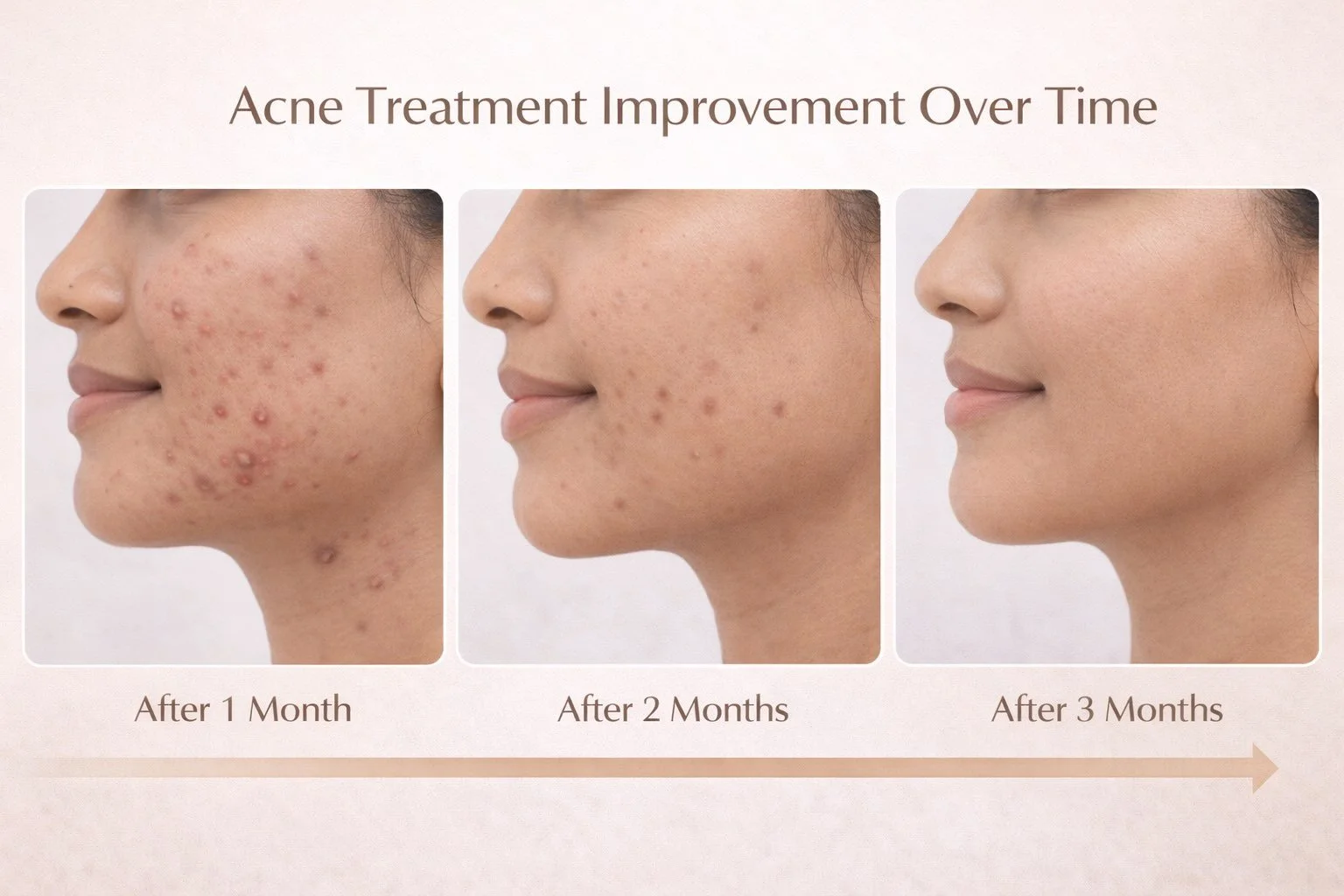
Active acne control: 6–12 weeks
Acne scar improvement: multiple sessions over months
Maintenance is key to preventing relapse
Consistency matters more than speed.
FAQs About Acne & Acne Scars
Can acne be cured permanently?
Acne can be controlled long-term with the right plan, but maintenance is important.
Do acne scars go away on their own?
No. Scars require clinical treatments to improve.
Is acne treatment painful?
Most treatments are well-tolerated and customised for comfort.
Can adults get acne?
Yes—adult and hormonal acne are very common.
Book a Personalised Acne Consultation
Acne and acne scars need customised treatment, not guesswork.
A proper consultation helps:
identify your acne type
choose the right treatment
prevent scarring and pigmentation