Laser Hair Removal for Women: The Complete Guide for Indian Skin
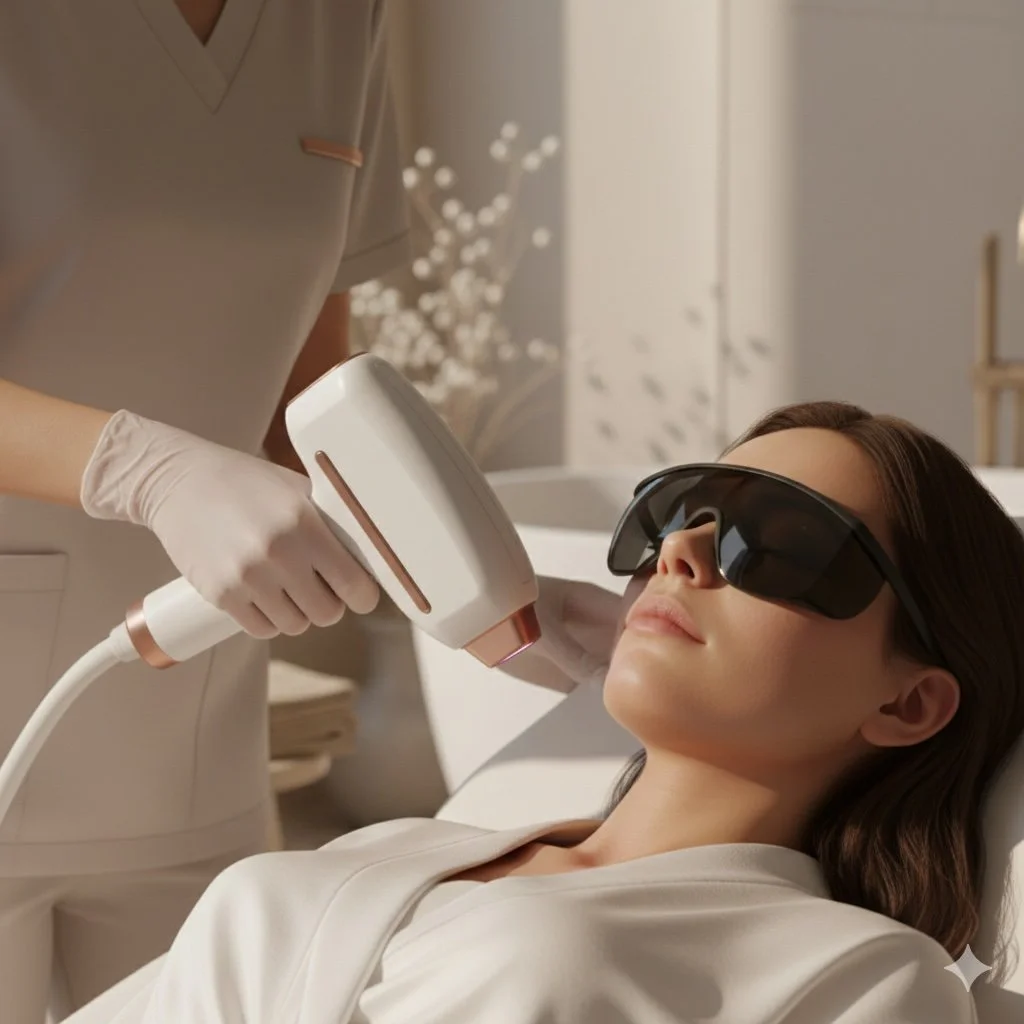
Laser Hair Removal Treatment
Introduction: Why Laser Hair Removal Is a Game-Changer for Women
Unwanted hair is not just a cosmetic concern—it affects confidence, comfort, and daily convenience. For many Indian women, traditional methods like waxing, shaving, or threading lead to ingrown hairs, pigmentation, razor bumps, and skin sensitivity.
Laser hair removal offers a long-term, medically proven solution, especially when performed correctly on Indian skin tones.
This guide explains how laser hair removal works, who it’s for, safety on Indian skin, results, sessions needed, and what to expect, so you can make an informed decision.
What Is Laser Hair Removal?
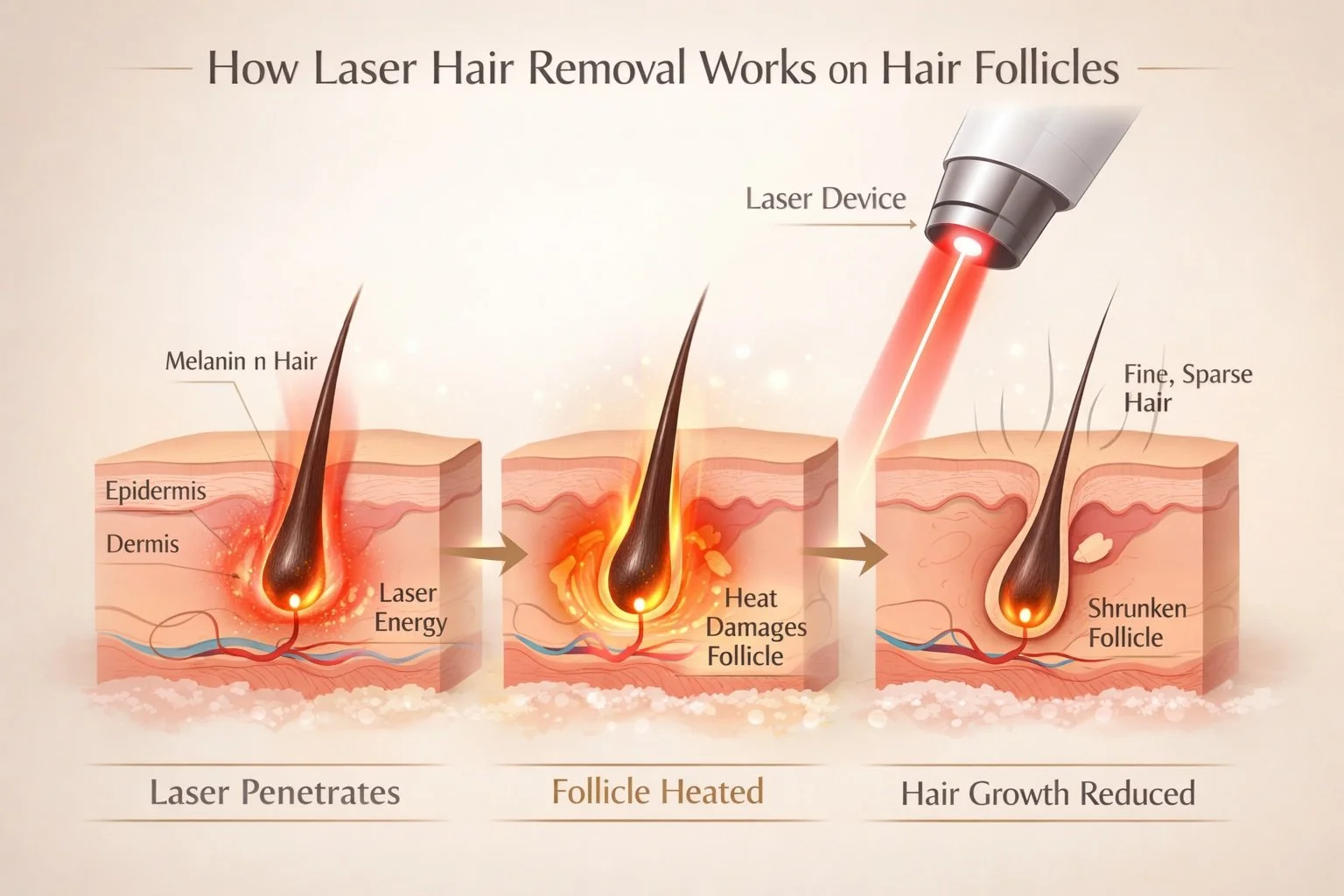
Laser hair removal is a medical aesthetic procedure that uses concentrated light energy to target hair follicles.
The laser’s heat damages the follicle, reducing its ability to regrow hair over time.
Key point:
Laser targets melanin (pigment) in the hair—not the skin—when done with the right technology.
Does Laser Hair Removal Work on Indian Skin?
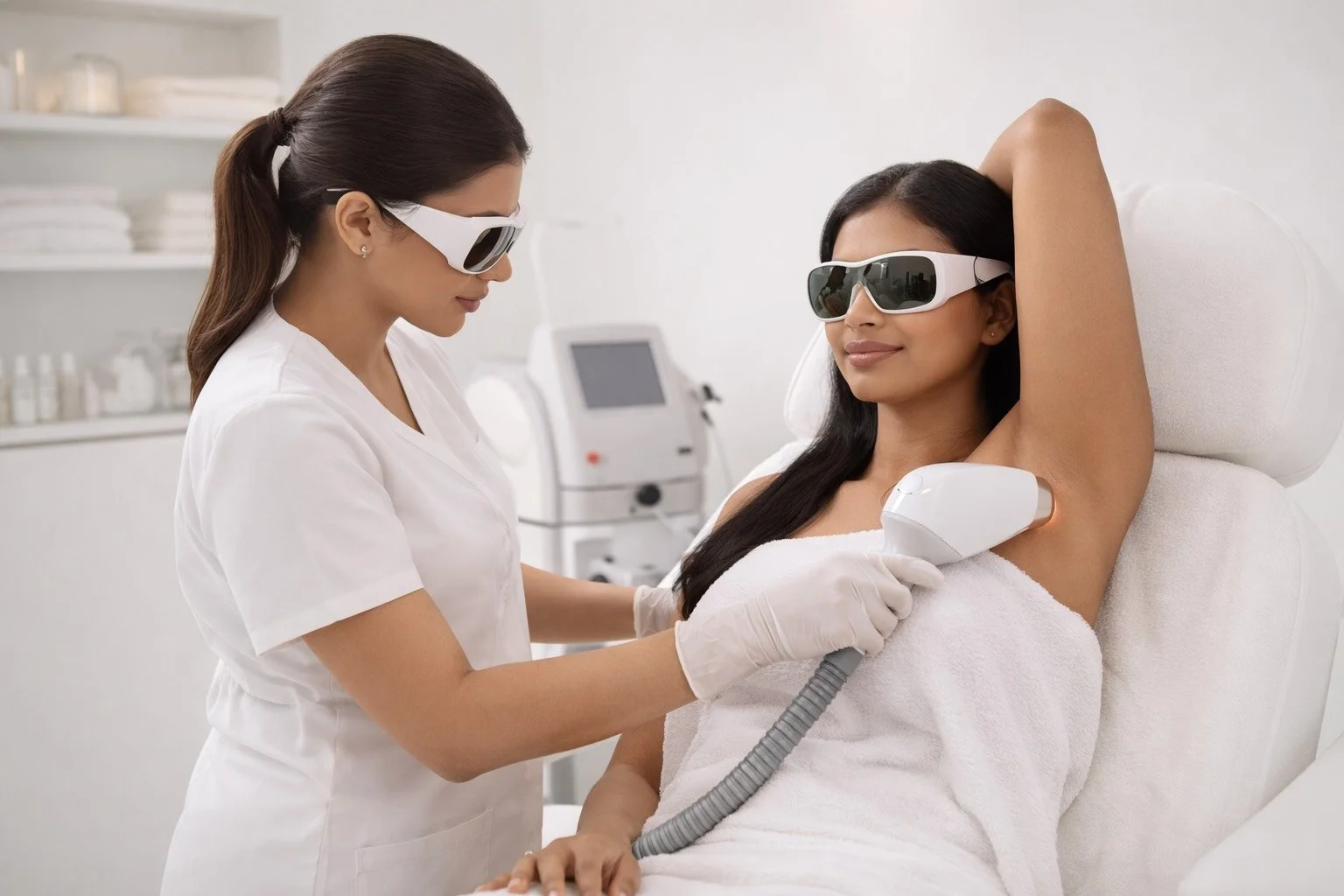
Yes—when the correct laser technology and settings are used.
Indian skin types (Fitzpatrick III–V) have higher melanin, which means:
Wrong lasers = higher risk of burns or pigmentation
Correct lasers = safe, effective, predictable results
Safest lasers for Indian skin:
Nd:YAG laser (gold standard for darker skin)
Advanced diode lasers with skin cooling
At Opal Radiant Studio, treatments are customised based on:
Skin tone
Hair thickness
Treatment area
Hormonal factors
Which Areas Can Women Get Laser Hair Removal For?
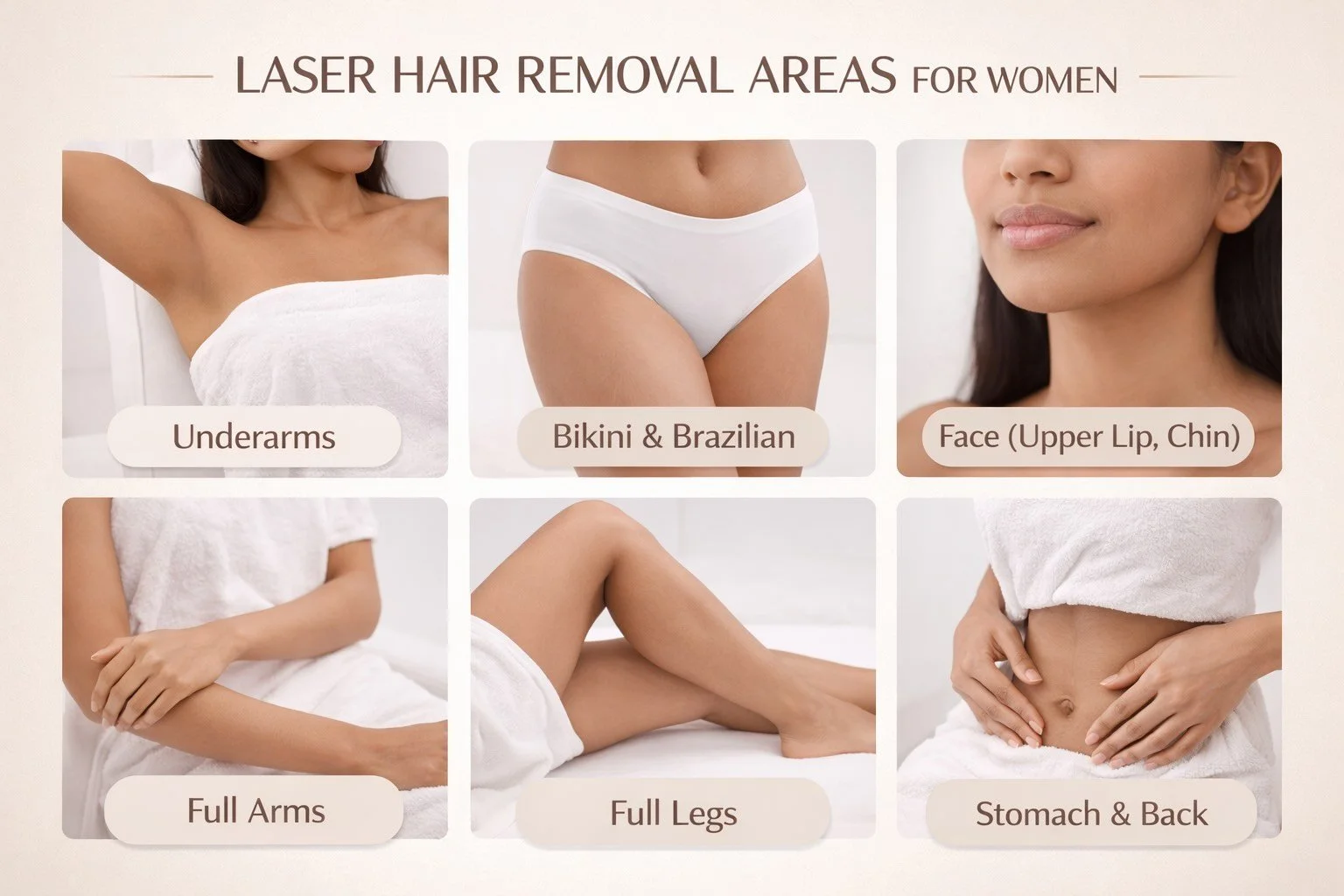
Laser hair removal is suitable for almost all body areas:
Underarms
Bikini & Brazilian area
Face (upper lip, chin, jawline)
Full arms & legs
Stomach & back
Full body treatments
Each area responds differently, which is why personalised treatment plans matter.
How Many Laser Sessions Are Needed?
Hair grows in cycles, and laser only works on active growth (anagen) phase hair.
On average:
6–8 sessions for visible, long-term reduction
Sessions spaced 4–6 weeks apart
Maintenance sessions may be needed once or twice a year
Hair becomes finer, lighter, and slower-growing with each session.
Is Laser Hair Removal Painful?
Most women describe the sensation as:
Mild warmth
Rubber-band snap feeling
Tingling or heat for a few seconds
Modern lasers use advanced cooling systems, making the treatment very tolerable, even for sensitive areas like bikini or underarms.
Pain level depends on:
Area treated
Hair thickness
Individual pain threshold
Is Laser Hair Removal Safe?

When performed by trained professionals using medical-grade devices, laser hair removal is extremely safe.
Possible temporary side effects:
Mild redness
Slight swelling around follicles
Warm sensation for a few hours
These usually subside within 24–48 hours.
Serious side effects are rare and mostly linked to:
Incorrect laser choice
Inexperienced operators
Ignoring pre- or post-care instructions
Laser Hair Removal vs Waxing & Shaving
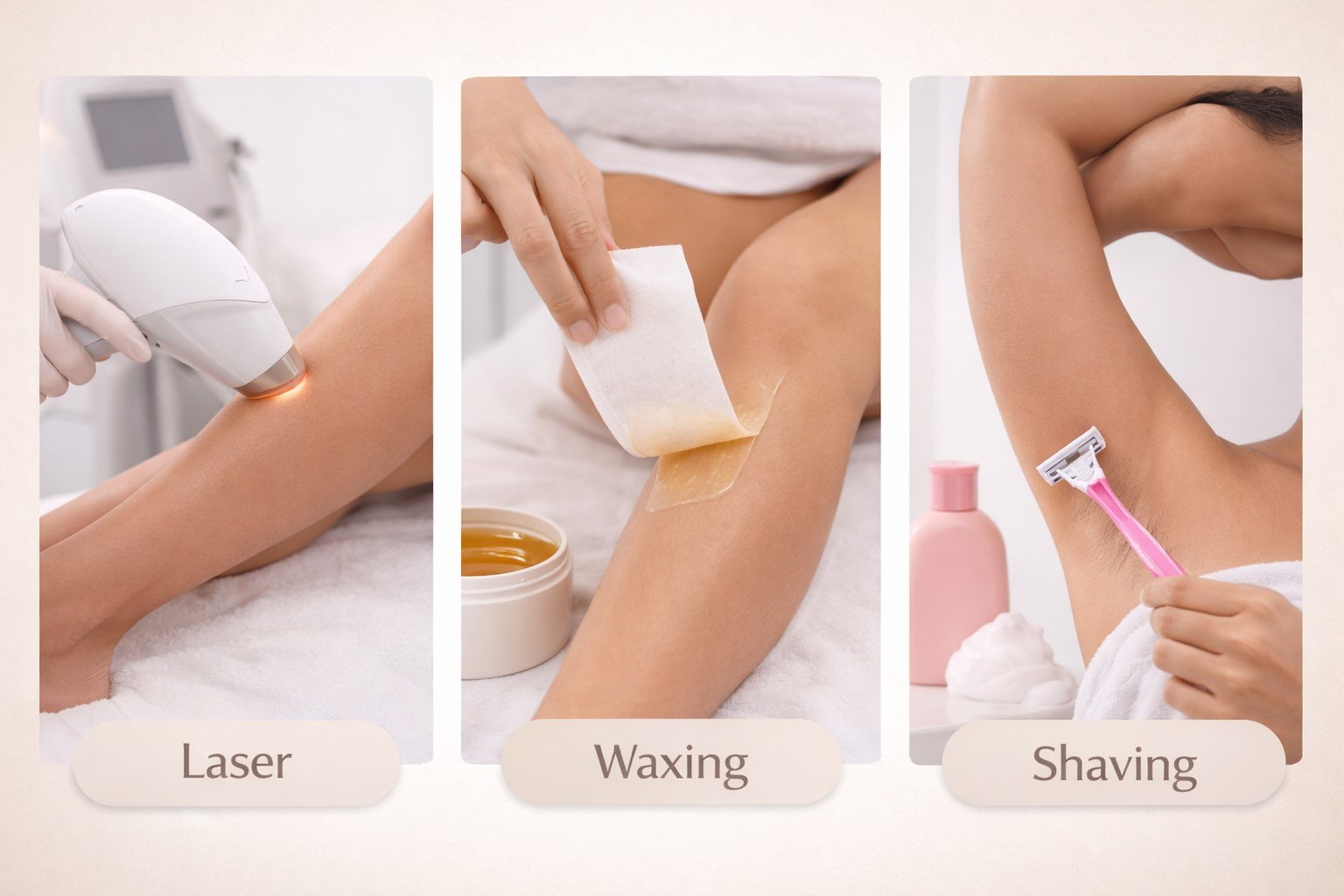
Laser Hair Removal vs Waxing & Shaving
Choosing the right hair-removal method depends on your goals: short-term convenience vs long-term reduction. Here’s a quick comparison to help you decide.
| Method | Long-Term Result | Skin Impact | Ingrown Hair Risk | Maintenance |
|---|---|---|---|---|
| Shaving | No (hair grows back quickly) | Razor bumps, irritation, dryness | High | Every 2–5 days |
| Waxing | No (temporary removal) | Pain, redness, pigmentation in sensitive skin | High | Every 3–4 weeks |
| Laser Hair Removal | Yes (long-term hair reduction) | Minimal when done correctly; can improve texture | Low | 6–8 sessions, then maintenance as needed |
Bottom line: Shaving and waxing are short-term fixes. Laser offers long-term reduction and can help reduce ingrowns and recurring irritation over time—especially when performed with the right technology for your skin type.
Who Is an Ideal Candidate?
You are a good candidate if you:
Have unwanted or excessive hair
Struggle with ingrown hairs or pigmentation
Want long-term hair reduction
Are tired of regular waxing/shaving
Laser can also help women with:
PCOS-related hair growth
Sensitive skin prone to reactions
Pre-Care & Aftercare (Quick Overview)
Before treatment:
Avoid waxing/threading (shaving is allowed)
No tanning or active skin infections
Inform doctor about medications
After treatment:
Avoid sun exposure
Use soothing gel if advised
No scrubs or hot showers for 24 hours
Why Choose a Medically Supervised Clinic?
Laser hair removal is not just a beauty service—it’s a medical procedure.
A good clinic ensures:
The right laser for your skin
Correct energy settings
Trained staff
Dermatologist supervision
Safety protocols
This dramatically improves results and reduces risks.
Frequently Asked Questions (FAQs)
Does laser remove hair permanently?
Laser causes permanent hair reduction, not 100% removal. Most women see 70–90% reduction.
Can laser cause pigmentation?
Only if incorrect lasers or settings are used. With the right technology, it actually reduces pigmentation.
Can I do laser during periods?
Yes. For bikini areas, many women prefer to reschedule for comfort.
Is laser safe for sensitive skin?
Yes—when customised properly.
Ready to Start Your Laser Journey?
If you’re considering laser hair removal, the most important step is a proper consultation.
A personalised plan ensures:
Faster results
Safer treatment
Better skin outcomes
Know more about the Laser Hair Removal offered by Opal Radiant